

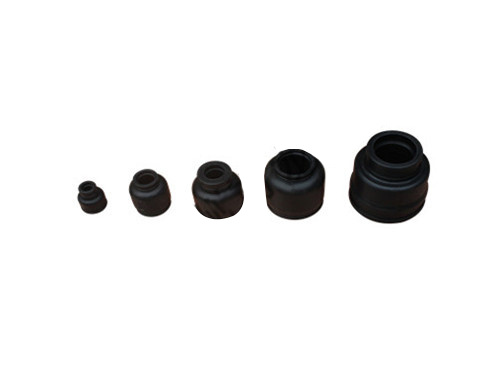
How Vertical Screw Pumps Support High-Pressure Applications
Vertical screw pumps—often categorized as progressive cavity (PC) pumps due to their core design—offer unique advantages for high-pressure fluid transfer, making them indispensable in industries like oil and gas, chemical processing, and water treatment. Below is a breakdown of their key contributions to high-pressure scenarios:
1. Positive Displacement (PD) Mechanism Ensures Steady Flow Under Pressure
Unlike centrifugal pumps, which experience flow reduction as system pressure increases, vertical screw pumps operate on a PD principle. The rotating rotor (helical screw) and stationary stator (mating helical cavity) form a series of sealed, moving chambers that transport fluid from inlet to outlet. This design delivers a constant flow rate regardless of pressure fluctuations, critical for high-pressure applications where consistent fluid delivery is non-negotiable (e.g., water injection for enhanced oil recovery).
2. Scalable Pressure Through Multi-Stage Configurations
Vertical screw pumps can achieve high differential pressures by stacking multiple rotor-stator stages. Each stage adds incremental pressure, allowing the pump to reach pressures up to 100 bar or more (depending on the number of stages). This scalability makes them suitable for applications requiring extreme pressure, such as high-pressure chemical injection or offshore well stimulation.
3. Low NPSH Requirements Mitigate Cavitation Risks
High-pressure systems often face challenges with low suction pressure or viscous fluids, which increase the risk of cavitation (air bubble formation that damages pump components). Vertical screw pumps have minimal Net Positive Suction Head (NPSH) needs, meaning they can operate effectively even with low inlet pressure. This reduces cavitation and extends pump lifespan in high-pressure environments.
4. Robust Handling of Viscous/Abrasive Fluids
Many high-pressure applications involve thick, abrasive, or shear-sensitive fluids (e.g., crude oil, sludge, polymer solutions). The gentle, non-turbulent flow of vertical screw pumps minimizes shear damage to fluids and reduces wear on components—even under high pressure. Their cavity design encapsulates fluid, preventing abrasive particles from causing excessive erosion, which is a common issue in centrifugal pumps at high pressures.
5. Energy Efficiency at High Pressures
Centrifugal pumps require increasing power to maintain flow as pressure rises, leading to inefficiency. Vertical screw pumps, however, maintain consistent efficiency because their PD operation relies on the rotor-stator interaction rather than impeller speed to generate pressure. This makes them cost-effective for continuous high-pressure operation, reducing energy consumption and operational costs.
6. Space-Saving Vertical Design for Compact Installations
The vertical configuration of these pumps saves floor space, a critical advantage in tight environments like offshore platforms, refineries, or industrial plants. Additionally, vertical installation allows the pump to be submerged or mounted close to the fluid source, improving priming and reducing suction line losses—key factors for maintaining pressure in high-demand systems.
7. Pulsation-Free Flow for System Stability
High-pressure systems are sensitive to flow pulsations, which can cause pipe vibrations, leaks, or damage to downstream equipment. Vertical screw pumps produce smooth, pulsation-free flow due to their continuous cavity movement, ensuring system stability and reducing maintenance needs in high-pressure applications.
In summary, vertical screw pumps address the core challenges of high-pressure fluid transfer—consistent flow, scalability, cavitation resistance, and robust fluid handling—making them a reliable choice for demanding industrial processes.

Copyright ? Jiangsu Longjie Pump Manufacturing Co., Ltd.



 Phone
Phone
Comment
(0)